
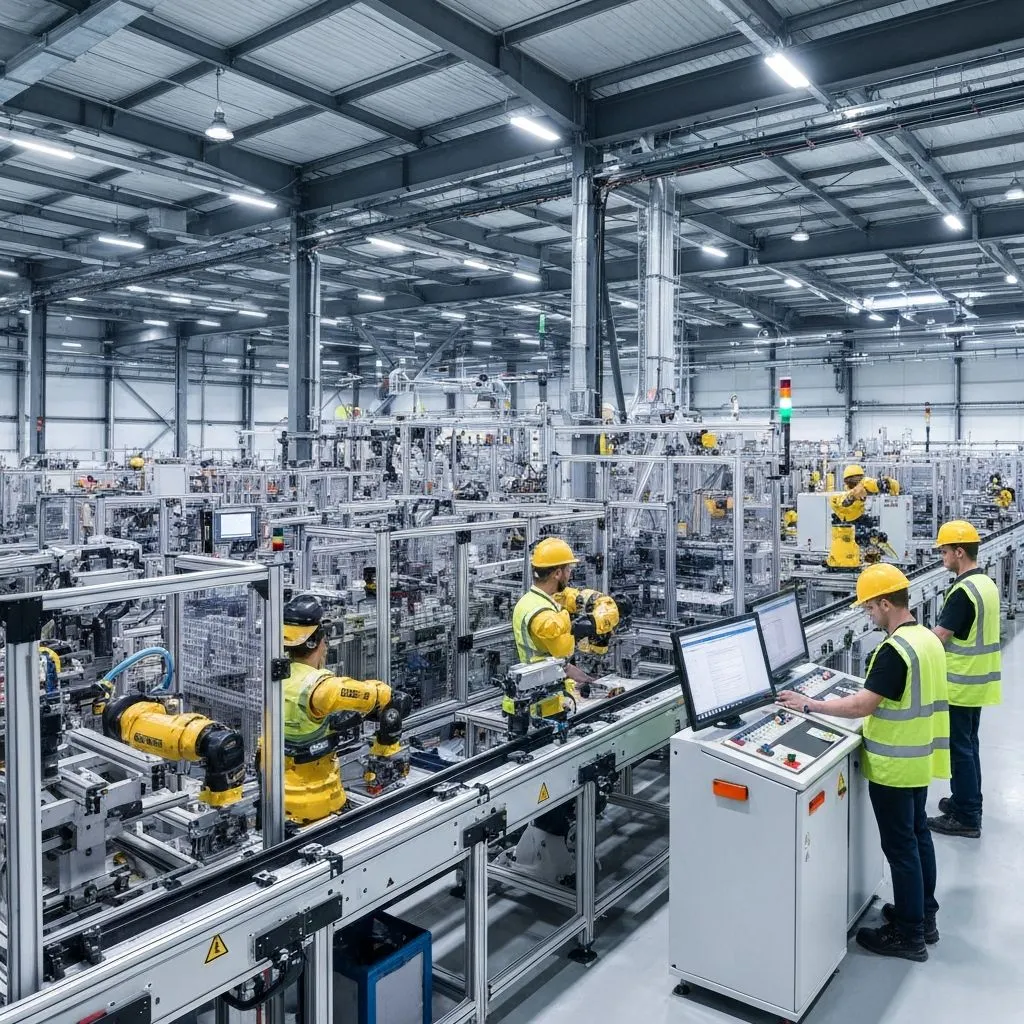
Manufacturing operations generate vast repetitive manual work across supply chain, quality documentation, inventory reconciliation, and compliance reporting. RPA applies software robots to rule-based tasks, freeing workers for higher-value activities.
1. Identifying High-Impact Automation Candidates
Best candidates have high transaction volumes, rule-based logic, structured data, and multi-system integration. Purchase order processing, invoice matching, and quality reporting frequently meet these criteria.
2. Building the Business Case
Beyond direct labor savings, quantify error reduction, faster cycle times, improved compliance, and 24/7 operation. A phased approach demonstrating quick wins within 90 days builds organizational momentum.
3. Technology Selection and Integration
Evaluate platforms based on their ability to interact with legacy ERP systems, shop floor applications, and decades-old custom software, plus their exception handling and orchestration capabilities.
4. Governance and Change Management
Transparent communication framing RPA as eliminating drudgery, not jobs, is essential. A Center of Excellence governing bot development ensures automation scales safely.
5. Scaling Beyond the Pilot
Develop a structured pipeline identifying and prioritizing new automations. A demand management process collecting ideas from frontline workers accelerates scaling.
Conclusion
SKYLINK partners with manufacturers to identify, implement, and scale automation initiatives delivering measurable improvements in operational performance.
SkyLink Team
Automation Consultant
SkyLink Team is a seasoned technology professional with extensive experience in business automation. At SkyLink, they lead initiatives that drive innovation and deliver exceptional results for our clients.